Flatbed Towing vs. Wheel-lift Towing: Which is Best?
When your vehicle needs a tow, you may hear a tow truck operator mention flatbed towing or wheel-lift towing. Both methods are commonly used by professional towing companies, but they are designed for different situations.
Choosing the right towing method can help protect your vehicle, prevent unnecessary damage, and make the towing process safer. So, which is better: flatbed towing or wheel-lift towing?
The answer depends on your vehicle, its condition, the type of breakdown, and the distance it needs to travel.
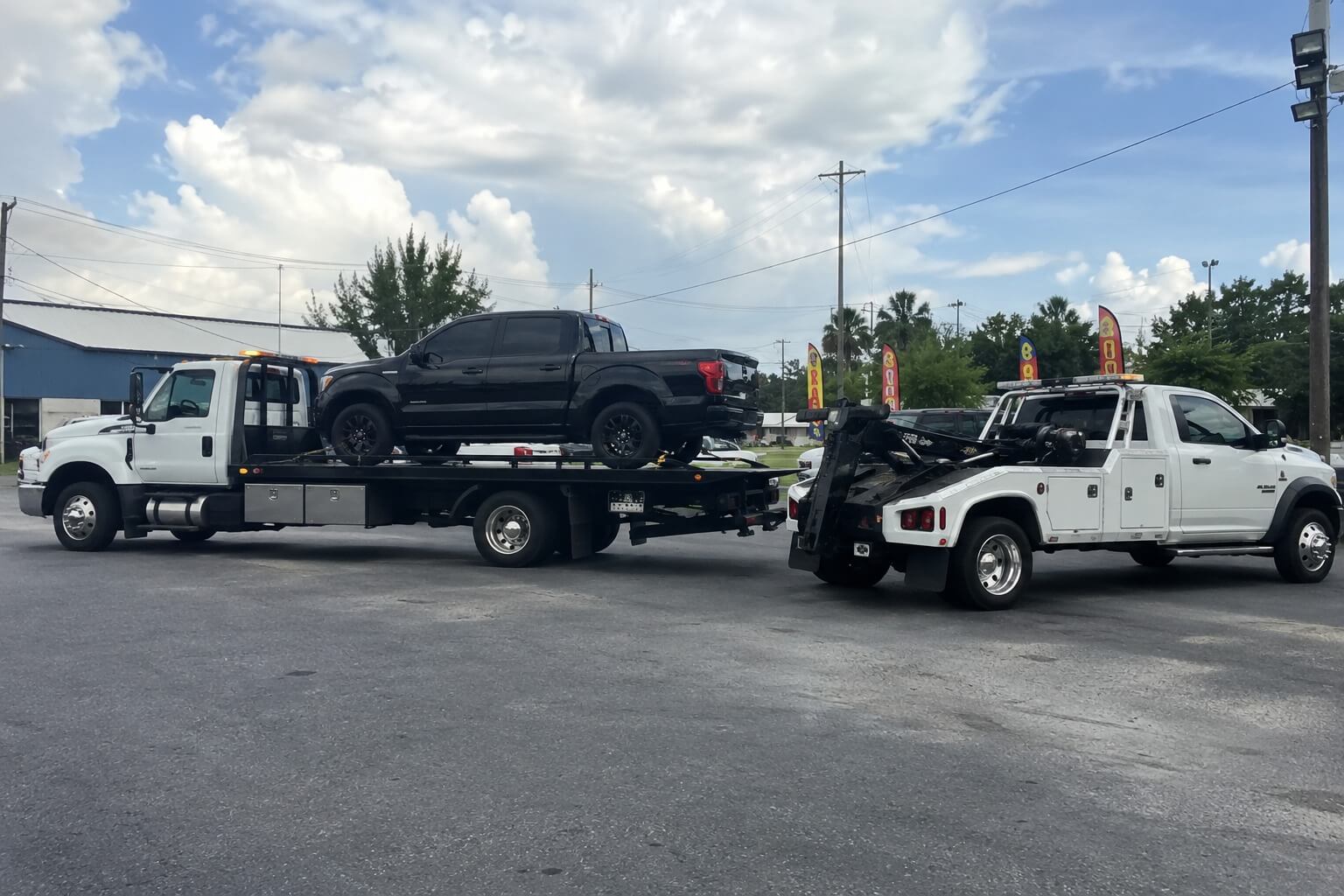
What is Flatbed Towing?
Flatbed towing uses a tow truck with a large, flat platform on the back. The entire vehicle is loaded onto the platform, keeping all four wheels off the road during transportation.
A hydraulic system tilts the bed toward the ground so the vehicle can be carefully loaded. once the vehicle is secured, the flatbed returns to its normal position.
Because the vehicle is completely off the road, flatbed towing provides excellent protection during transportation.
When Is Faltbed Towing a Good Choice?
Flatbed towing is often recommended for:
• All-wheel-drive (AWD) and four-wheel-drive (4WD) vehicles
• Luxury and high-end vehicles
• Classic and collectible cars
• Low-clearence sports cars
• Vehicles with extensive damage
• Vehicles that cannot roll properly
• Long-distance vehicle transportation
• Cars with damaged wheels or suspension components
Flatbed towing can also be a smart option when minimizing road contact is a priority.
What is Wheel-Lift Towing?
Wheel-lift towing uses a metal yoke that lifts either the front or rear wheels of a vehicle off the ground. The remaining wheels stay on the road while the tow truck transports the vehicle.
This method is generally faster to set up and works well when a vehicle can still roll and steer properly.
Wheel-lift tow trucks are also highly maneuverable, making them useful for crowded streets, parking lots, apartment complexes, and other areas where a larger flatbed may have difficulty positioning.
When Is Wheel-Lift Towing a Good Choice?
Wheel-lift towing can be appropriate for:
• Standard passenger cars
• Short-distance towing
• Vehicles parked in tight spaces
• Local breakdowns
• Cars that can roll and steer
• Situations where quick vehicle removal is necessary
• Some front-wheel-drive or rear-wheel-drive vehicles
However, the towing company must determine whether the vehicle’s drivetarin and condition are compatible with this method.
Flatbed vs. Wheel-lift Towing: Key Differences
The biggest difference is how the vehicle is transported.
With flatbed towing, all four wheels are lifted off the road. With wheel-lift towing, two wheels generally remain on the ground.
| Feature | Flatbed Towing | Wheel-Lift Towing |
|---|---|---|
| Wheels on Road | None | Usually two |
| Vehicle Protection | Excellent | Good when properly used |
| AWD/4WD Vehicles | Often preferred | Depends on vehicle |
| Damaged Vehicles | Excellent choice | May not be suitable |
| Tight Spaces | Less maneuverable | Highly maneuverable |
| Loading Time | Usually longer | Usually faster |
| Long-Distance Towing | Excellent | Better suited to certain situations |
| Low-Clearance Vehicles | Often preferred | May require extra care |
Which Towing Method is Safer?
both towing methods can be safe when the correct equipment and procedures are used.
However, flatbed towing generally offers more protection because the vehicle has no wheels touching the roadway. This can be especially important for vehicles with specialized drivetrains, damaged tires, suspension problems, or delicate components.
Wheel-lift towing is not automatically unsafe. A properly equipped toe truck operator can safely transport many vehicles using this method when the vehicle is compatible with wheel-lift towing.
The key is matching the towing method to the vehicle.
Is Flatbed Towing Better for AWD and 4WD Vehicles?
In many cases, yes.
AWD and 4WD vehicles can require special towing procedures because their drivetrains are designed to transfer power to multiple wheels. Incorrect towing can potentially cause mechanical problems.
A flatbed keeps all four wheels off the pavement, making it a common choice for transporting AWD and 4WD vehicles.
Always check your vehicle manufacturer’s towing instructions and let the towing professional know if your vehicle has AWD and 4WD.
Is Wheel-Lift Towing Better for Local Tows?
For certain local towing situations, wheel-lift towing can be the more practical option.
If your car has broken down on a city street, is blocking a driveway, or needs to be moved from a tight parking area, a wheel-lift truck can often position itself quickly and maneuver around obstacles.
For a short-distance tow involving a vehicle that is in suitable condition, wheel-lift towig may provide an efficient solution.
What If My Vehicle Is Damaged?
If your vehicle has been involved in an accident or has a damaged wheel, tire, axle, steering system, or suspension, tell the towing company bfore the truck arrives.
A damaged vehicle, depending on the damage.
In these siatuations, flatbed towing may provide a safer way to load and transport the vehicle, depending on the damage.
Professional operators can asses the situation and choose the apropriate equipment.
Flatbed Towing for Low-Clearance Vehicles
Sports cars, modified vehicles, and other low-clearance cars can require additional care during loading.
A flatbed tow truck can often provide better control during the loading process. The operator can use appropriate equipment and positioning techniques to reduce the risk of scraping the vehicle’s undercarriage.
If your vehicle has a particularly low ride height, tell the towing company before requesting service.
Which One Costs More?
The Price of towing depends on several factors, including:
• Distance
• Vehicle type
• Location
• Time of service
• Vehicle condition
• Required equipment
• Road and traffic conditions
• Recovery difficulty
Flatbed towing can sometimes cost more than a basic wheel-lift tow because of the equipment involved and the type of service required.
However, the cheapest towing method is not always the best choice. Using the correct equipment can help reduce the risk of additional vehicle damage.
Ask the towing company for a price estimate before service whenever possible.
How to Choose the Right Towing Method
If yu are unsure which towing method your vehicle needs, you do not have to figure it out yourself.
When calling a towing company, provide as much information as possible:
1.Tell them your vehicle’s make and model.
2.Explain whether it is AWD, 4WD, FWD, or RWD If you know.
3. Describe any mechanical or accident damage.
4.Mention whether the vehicle can roll and steer.
5.Tell them if the vehicle is in a tight or difficult location.
6.Explain where you need the vehicle transported.
This information helps the towing company send the appropriate truck and equipment.
Flatbed Towing vs. Wheel-Lift towing: Which is Best?
There is no single towing method that is best for every vehicle.
Flatbed towing is often the better choice for AWD/4WD vehicles, luxury cars, classics, low-clearance vehicles, heavily damaged vehicles, and situations where keeping all four wheels off the road is important.
Wheel-lift towing can be an efficient choice for many standard vehicles, particularly for short-distance local towing and situations where maneuverability is important.
The most important factor is not simply choosing flatbed or wheel-lift. It is choosing the right towing method for your specific vehicle and situation.
If your vehicle has broken down, been involved in an accident, or simply needs to be transported, contact a professional towing company and explain your situation. An experienced tow operator can evaluate the vehicle and determine the safest way to move it.
Need a Tow?
Whether you need flatbed towing, wheel-lift towing, accident recovery, or roadside assistance, professional towing equipment can help get your vehicle where it needs to go.
If you’re stranded, don’t risk making the situation worse by attempting to move a damaged vehicle yoursel. Contact a reliable local towing company and provide the vehicle details and your exact location so the appropriate equipment can be dispatched.
WE ALSO PROVIDE OUR SERVICES NEARBY CITIES IN
PRAIRIEVILLE, LA
Fast, reliable roadside & towing service across Prairieville and the surrounding communities.
Contact Us
Feel free to contact us for any towing and roadside needs
Call (225) 208-7622 to get in touch with Premier Towing & Road Rescue for emergency roadside assistance or towing. Our staff is available to help you at all times, offering dependable and expert towing services. Our top concerns are your happiness and safety.
- Phone: (225) 208-7622
- Address: Prairieville, LA 70769
